

 0
0 Free shipping within Singapore on orders above $50 📦 | Join our mailing list to enjoy 15% OFF your first order REGISTER NOW
Medically reviewed by Dr Amaris Lim. Last updated September 2026.
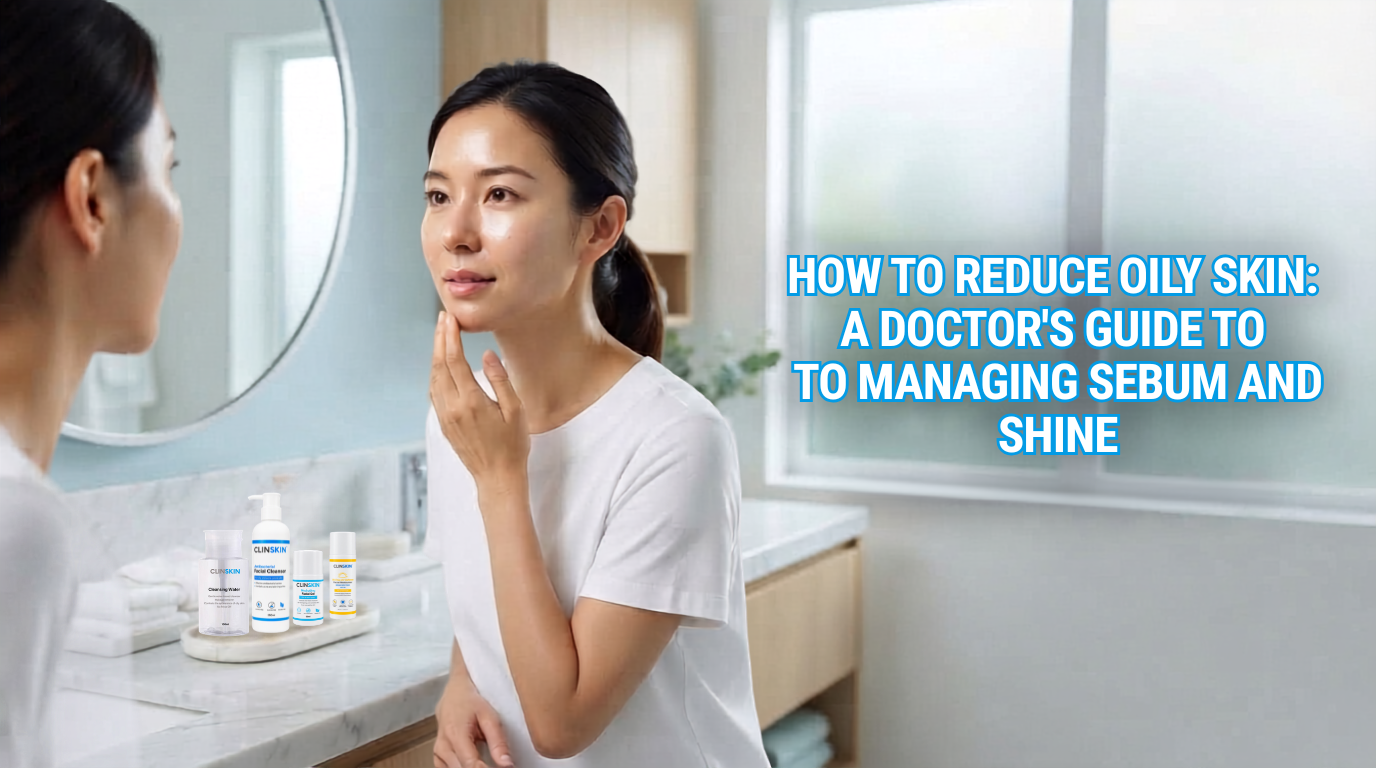
Oily and acne-prone skin is one of the most common skin concerns we see in clinic, especially in Singapore’s hot and humid climate. But what causes our skin to be oily, and how can we control oily skin better?
Oily skin happens when your sebaceous glands produce more sebum (natural oil) than your skin needs. It typically results in a persistent shine and enlarged, visible pores, most noticeably across the T-zone (forehead, nose, and chin).
Skin can also feel thicker, and pores are more prone to becoming clogged with oil and dead skin cells. These clogged pores result in whiteheads (closed comedones), blackheads (open comedones) and acne breakouts.
There is a silver lining: people with naturally oilier skin tend to develop fewer fine lines and wrinkles over time, since the extra sebum helps preserve the skin’s moisture barrier as it ages.
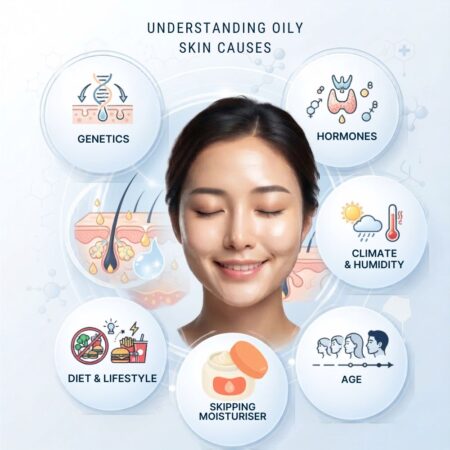
Several overlapping factors influence how much oil your skin produces:
Recommendations:
Avoid:
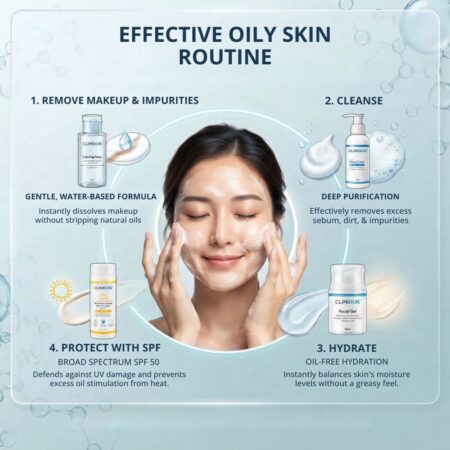
4 Steps for an Effective Oily Skin Routine
A simple, consistent routine matters far more than an expensive one:
Before washing your face, use a makeup removed to cleanse off makeup, sunscreen, and the day’s grime.
Clinskin’s Gentle Cleansing Water removes makeup and sunscreen effectively, and doubles as a quick no-rinse skin skin cleanser during the day (after a workout or a sweaty commute).
Cleanse your face twice a day with a face wash formulated for oily and acne-prone skin.
Clinskin’s Antibacterial Facial Cleanser targets acne-causing bacteria and excess oil, and is a good fit if you are also dealing with acne breakouts.
Opt for a lightweight, non-comedogenic facial gel that hydrates without adding greasiness, and helps your skin maintain its water balance (which in turn can help regulate oil production).
Clinskin’s Hydrating Facial Gel contains ingredients like hyaluronic acid that draw moisture into the skin, while lighter humectants such as glycogen and xylitol support hydration without clogging pores or leaving a greasy feel.
Sunscreen is non-negotiable, especially in Singapore’s high-UV climate, but the wrong formula can leave oily skin looking greasier and more prone to breakouts.
Clinskin’s Oil-free UV Defense SPF50 is a hybrid physical and chemical sunscreen with broad UVA and UVB coverage. It also has built-in mattifying agents to control shine throughout the day, while ingredients like niacinamide and vitamin E support the skin barrier and calm visible redness.
Treatments for Oily Skin
Topical niacinamide
Topical retinols
Topical retinoids (adapalene, tretinoin etc)
Oral Isotretinoin
Most oily skin can be managed well with a consistent, appropriately formulated routine. Consider seeing a doctor if you have:
A professional assessment can help identify whether hormonal factors, medication, or an underlying skin condition is contributing to your skin issues, and tailor a treatment plan beyond over-the-counter skincare.
This article is intended for general educational purposes and does not replace personalised medical advice. If you have ongoing concerns about your skin, please consult a doctor or dermatologist.
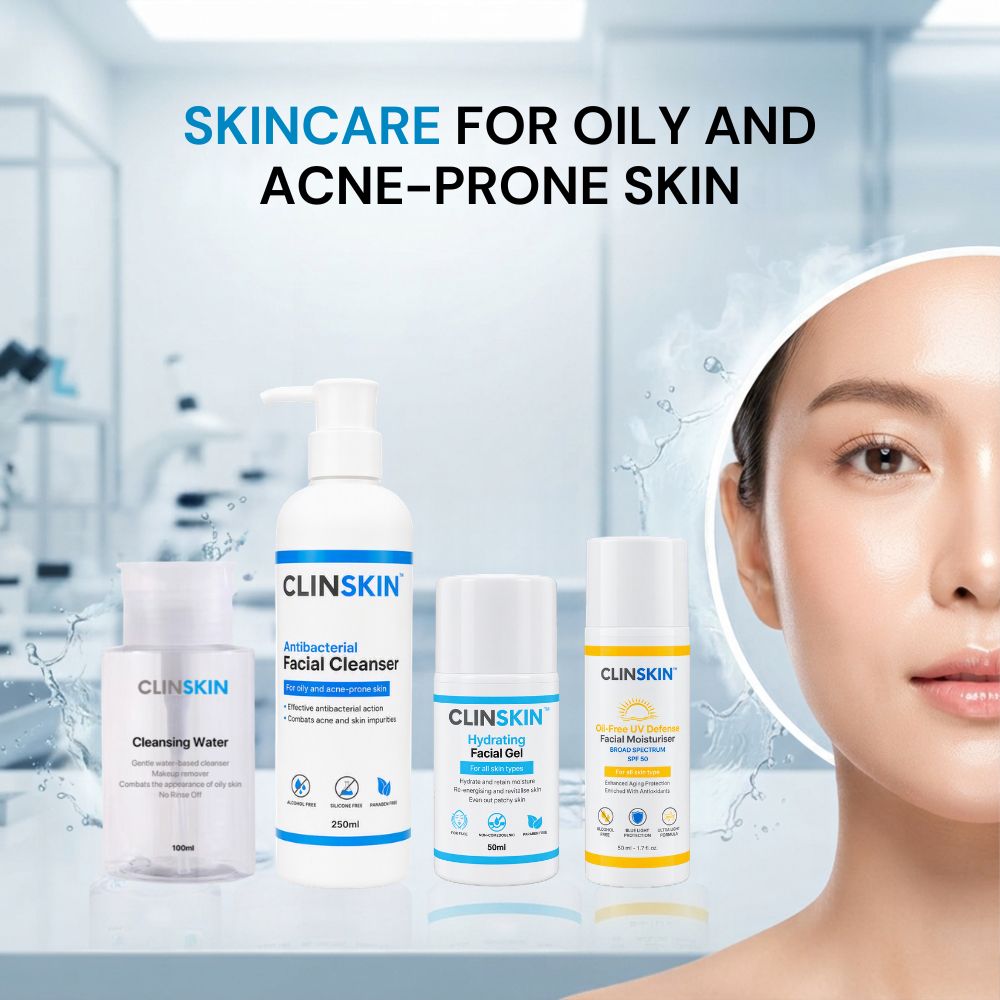
Clinskin Acne Relief Bundle (Limited Time Offer)
$88.90
Frequently Asked Questions
No, oily skin is caused by sebaceous gland activity, not a lack of water intake. However, keeping your skin's surface hydrated with moisturiser can help regulate oil production, since dehydrated skin tends to overproduce sebum.
No, oily skin is not inherently harmful, but increases the risk of clogged pores and acne.
Oily skin does not directly cause acne, but excess sebum combined with dead skin cells and bacteria does create ideal conditions for clogged pores, blackheads, and breakouts. This is why cleansing and using non-comedogenic products matters more for oily skin than for other skin types.
Yes. Skipping moisturiser is one of the most common mistakes people with oily skin make. A lightweight, oil-free, non-comedogenic moisturiser hydrates without adding excess oil, and helps prevent the rebound oiliness that comes from dehydrated skin.
Aim to wash your face twice daily, in the morning and night, as well as after sweating or exercise.
Facials can temporarily improve the appearance of oily skin as steaming, extractions, and clay masks physically remove built-up sebum and debris from pores. However, there is little clinical evidence that facials meaningfully or permanently change how much sebum your glands produce. Some facial treatments may also irritate the skin barrier, which may worsen breakouts.
Makeup itself does not change how much sebum your skin produces, but certain formulations can make oiliness worse in practice. Oil-based, heavy, or comedogenic makeup can trap sebum and dead skin cells against the pore, making skin look shinier and increasing the risk of clogged pores and breakouts. Sleeping in makeup, or not cleansing thoroughly, also lets oil, product residue, and bacteria sit on the skin overnight, which is much more strongly linked to breakouts than wearing makeup during the day.
Sunscreen itself does not increase sebum production. However, the wrong formula can make oily skin look and feel greasier, as many traditional sunscreens use heavy emollients designed for normal-to-dry skin. On the other hand, oil-free formulas with mattifying agents are designed specifically to sit on oily skin without adding to the shine.

Dr Amaris Lim
MBBS, MMed (Fam Med), GDip (Sports Med)
Dr Amaris is a Family Physician at Frontier Healthcare with a special interest in Sports Medicine. She also contributes as one of the Core Faculty for the Family Medicine Residency Program with the National University Health System (NUHS). She currently practices at Canberra and Bukit Batok.