When people think about sunscreen, they often associate it with beach holidays or preventing painful sunburns. But sun protection is about much more than avoiding redness after a day outdoors. Daily exposure to ultraviolet (UV) radiation can lead to cumulative skin damage over time, contributing to premature ageing, pigmentation, and even skin cancer — regardless of your skin tone. In sunny climates like Singapore, protecting your skin from the sun should be part of your everyday skincare routine.
Why Is Sun Protection Important?
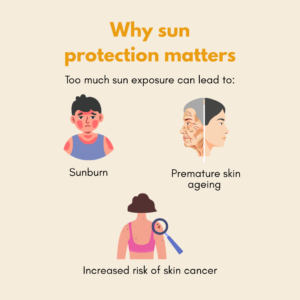
Ultraviolet radiation from the sun damages the skin gradually throughout our lifetime. Even small amounts of daily sun exposure can accumulate and contribute to:
Fine lines and wrinkles
Uneven skin tone and pigmentation
Loss of skin elasticity
Sun spots
Skin cancers
Sun Damage Happens Gradually
One common misconception is that sun damage only occurs during outdoor activities or under strong sunlight. In reality, small amounts of daily sun exposure accumulate throughout life. Even people with darker skin tones are not immune to sun damage. While darker skin contains more melanin and may have some natural protection against UV radiation, all skin types can still develop pigmentation issues, photo-ageing, and skin cancers.
Types of UV Rays
There are two main types of UV rays that affect the skin:
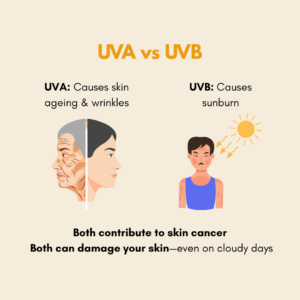
UVB Rays
Mainly affect the outer layer of the skin
Responsible for sunburns
Increases the risk of skin cancer
UVA Rays
Penetrate deeper into the skin
Contribute to premature ageing, collagen breakdown, pigmentation, and oxidative stress
Also penetrate through glass, meaning your skin is still exposed indoors or while driving
Common Questions about Sunscreen
Do I need sunscreen when it is cloudy outside?
Yes! Many people think sunscreen is only necessary on sunny days, but harmful UV rays are still present even when it is cloudy or cool outside. UV rays can penetrate through clouds, exposing your skin to sun damage on overcast days.
I have a darker skin tone, do I still need sunscreen?
Yes! While darker skin contains more natural melanin, all skin tones can still experience sun damage, premature ageing, pigmentation, and skin cancer. In addition, visible light can worsen pigmentation issues more significantly in darker skin tones.
Will sunscreen cause Vitamin D deficiency?
Although sunscreen may theoretically reduce Vitamin D production by blocking UV rays, studies have shown that regular sunscreen use has little to no significant effect on Vitamin D levels in most people.
Is makeup with SPF an alternative to sunscreen?
No. While some makeup products contain SPF, they are usually not applied thickly enough to provide adequate sun protection. Makeup with SPF can offer some additional coverage, but it should not replace your daily sunscreen. For optimal protection, sunscreen should be applied underneath makeup.
I am indoors most of the day — do I still need sunscreen?
Yes! UVA rays can penetrate through glass windows, meaning your skin may still be exposed to UV damage while indoors, driving, or sitting near windows. Daily sunscreen use helps protect against cumulative sun damage and premature skin ageing even when spending most of the day
indoors.
Tips for Choosing a Sunscreen
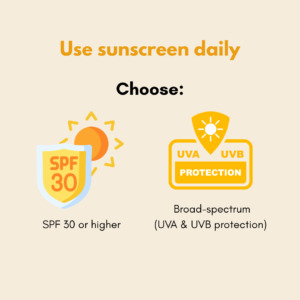
We recommend choosing a broad-spectrum sunscreen that protects against both UVA and UVB rays, with a high SPF for effective sun protection. If you have sensitive skin, opt for a fragrance-free formula to help minimise irritation. For oily or acne-prone skin, choose a non-comedogenic sunscreen that won’t clog pores. Our Oil-Free UV Defense SPF50is a hybrid sunscreen that provides broad-spectrum UVA and UVB protection, and blue light protection:
Ultra-light, oil-free formula
Doubles as a moisturiser
Fragrance-free to minimize irritation
Enriched with Niacinamide and Vitamin E for hydrated, healthy skin
Healthy Skin Starts with Daily Protection Sun protection is one of the most important long-term investments you can make for your skin health. By protecting your skin daily, you can help reduce premature ageing, pigmentation, and cumulative UV damage over time.